
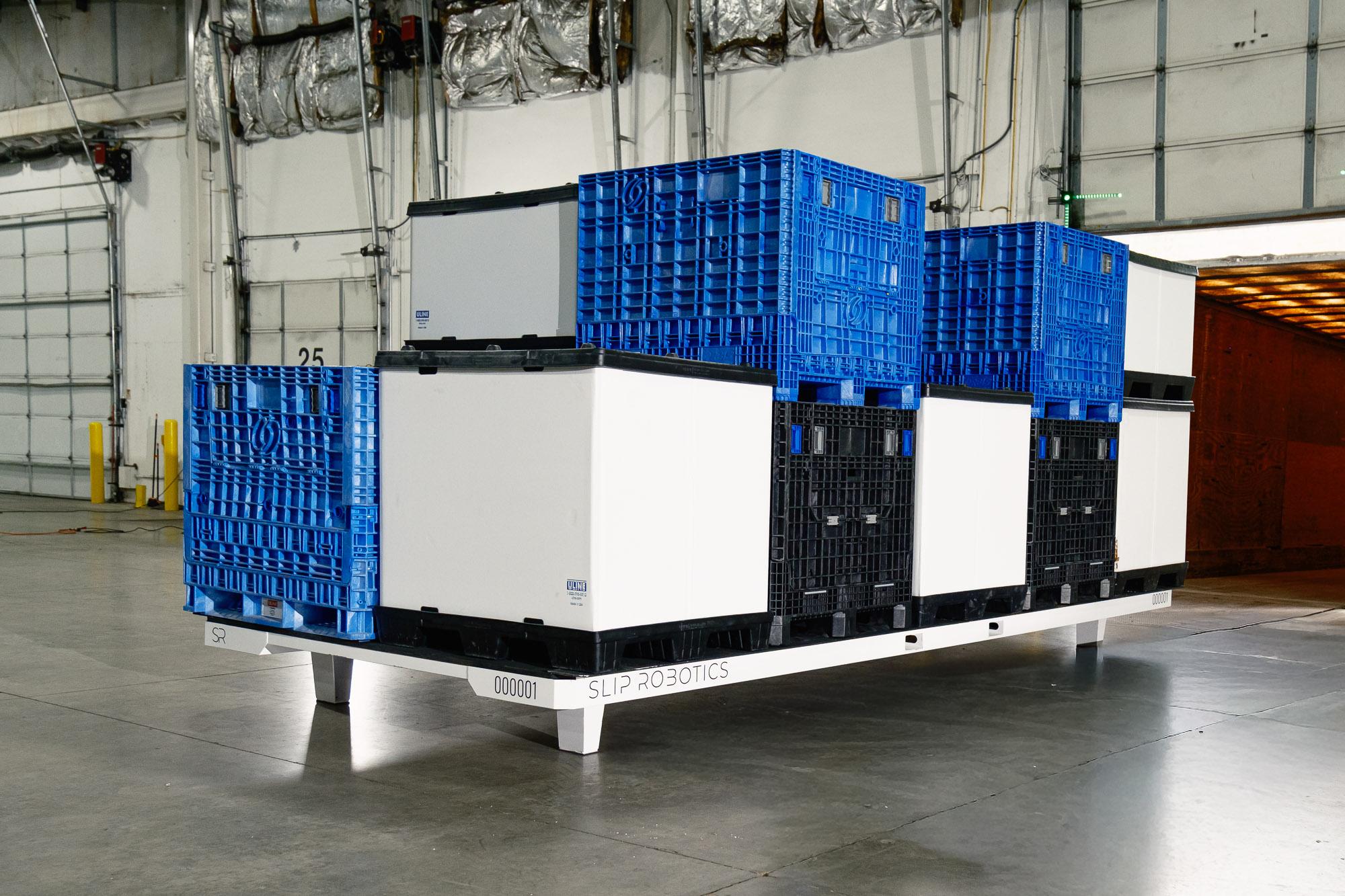
SlipCarrier Tray
The Standard Freight Handling SlipCarrier
Tray is the standard SlipCarrier used with SlipLift to stage and move freight for autonomous trailer loading and unloading. Freight is staged directly onto Trays—whether palletized or floor-loaded—creating a consistent unit that SlipLift can move quickly and precisely.
- 20,000 lb payload capacity
- 10 pallet positions (single stack)
- Live GPS tracking on every Tray
- Last-mile enabled
Trays scale with your operations
By standardizing how freight is staged and moved, Tray enables a repeatable, automated loading process.
Shared Assets
Trays are not dedicated to a specific robot. They are shared assets across the operation for flexible scaling.
Palletized or Floor-Loaded
Stage freight directly onto Trays—whether palletized or floor-loaded—creating a consistent unit SlipLift can move.
Stack 14 High
When not actively moving freight, Trays stack up to 14 high, reducing floor space and simplifying storage.
Last-Mile Enabled
Pre-stage freight before drivers arrive. SlipLift transfers the Tray into box trucks in minutes.
Flexible asset management
Trays are not dedicated to a specific robot. Any SlipLift can transfer any Tray into or out of a trailer. This allows fleets to scale efficiently and remain flexible.
- Not tied to specific robots
- Reposition as routes change
- Better asset management
Technical Specifications
Standard specifications for Tray. Exact configurations may vary based on application.
204" x 98"
Dimensions
196" x 88"
Dimensions (Retracted)
20,000 lbs
Payload Capacity per Tray
10 single / 20 double stacked
Pallet Positions (48"x40")
3
Trays per Trailer
14 Trays
Stack Height
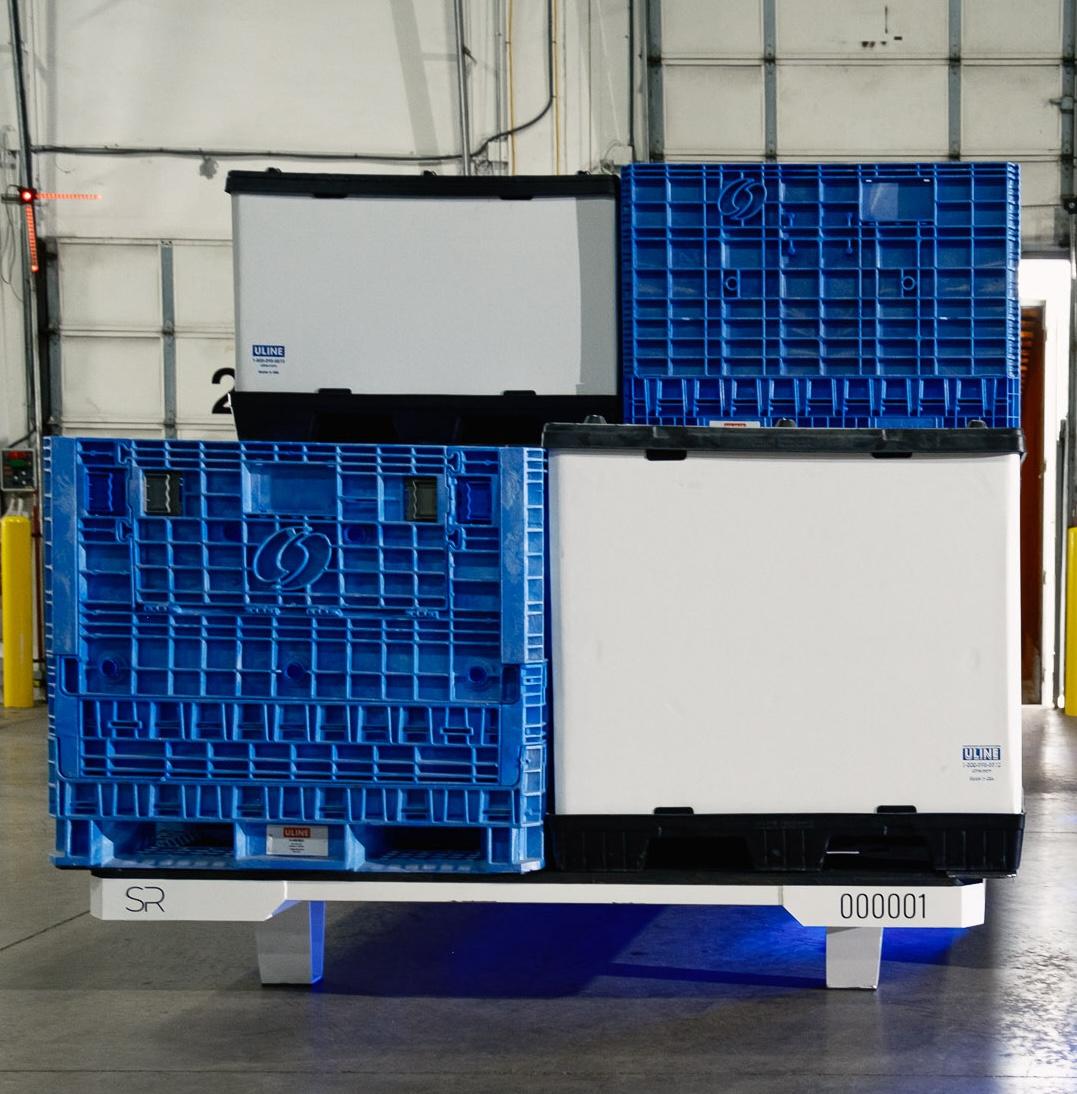
Efficient when not in use
When not actively moving freight, Trays stack up to 14 high, reducing floor space requirements and simplifying storage.
Compact Storage
Stored compactly at docks and facilities
Easy Transport
Moved efficiently between sites
Flexible Repositioning
Repositioned as routes and volumes shift
Frequently asked questions
Talk to an Expert
Learn how Tray fits into your dock operations and determine where autonomous trailer loading and unloading delivers the greatest impact.