
Manual or automated trailer loading and unloading: which is right for your business?
Manual or automated trailer loading and unloading: which is right for your business? This is a question that many logistics and supply chain professionals are grappling with today. As technology continues to advance, more and more companies are turning to automation to improve efficiency, accuracy, and safety in their loading and unloading operations. But is automation the right choice for every business? In this blog post, we'll take a look at the pros and cons of both manual and automated trailer loading and unloading to help you decide which is best for your operation.
Manual Loading and Unloading
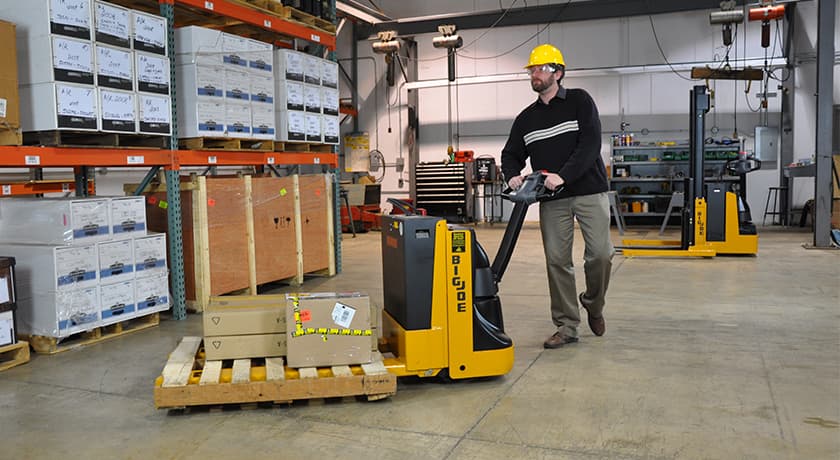
Manual loading and unloading is the most popular method used in the industry today. This is the traditional method of loading and unloading trailers, where goods are moved by hand using pallet jacks, forklifts, or other manual equipment. Manual loading and unloading is a tried and true method that has been used for decades, and it still has its advantages. For one, it is typically less expensive to implement and maintain than automated systems. Additionally, manual loading and unloading can be more flexible, as it allows for greater control over the placement of goods within a trailer.
On the other hand, manual loading and unloading also has its drawbacks. It can be labor-intensive, which can lead to increased costs, as well as increased risk of injury. Additionally, manual loading and unloading can be less safe than automated systems, as it requires operators to interact with loads directly or via the use of equipment.
Automated Trailer Loading and Unloading
Automated trailer loading and unloading solutions have been increasing in popularity in recent years. Automated systems use technology such as conveyors, robotics, and other advanced equipment to move goods in and out of trailers. Automated systems are becoming more and more popular in the logistics and supply chain industry, as they offer a number of advantages over manual systems.
One of the biggest advantages of automated systems is that they can significantly improve efficiency and accuracy. Some automated systems can move goods much faster than manual systems, and they are less prone to errors. Additionally, automated systems can lead to significant cost savings, as they can reduce labor costs and increase productivity.
Automated systems can also have their downsides. Some of these systems can be costly to implement and maintain, and can be less flexible than manual systems. They also require specialized skills and knowledge to operate.
The Best of Both Worlds
Slip Robotics trailer loading and unloading solution maintains the flexibility and ease of a manual loading operation while providing reduced cost and increased speed that is rare within automated systems. For more information contact Slip Robotics to learn more.
More Articles
Truck Loading Automation
Truck loading automation explained for dock teams. Learn how automated truck loading systems improve trailer turns and dock consistency, what physical dock automation covers versus software, and where SlipBot and SlipLift fit by freight type and route pattern.
OperationsAutomated Trailer Loading
Automated trailer loading explained: how robotic loading systems turn trailers in minutes, handle unloading too, and deploy without facility changes.
OperationsLoading and Unloading Trucks
A field guide to steadier dock flow: practical moves for staging, fewer trailer entries, and manual vs. automated loading, plus where SlipBot and SlipLift fit. Loading and unloading trucks gets easier when the dock follows a rhythm instead of a scramble.
Ready to transform your dock operations?
See SlipBots in action with a personalized demo.